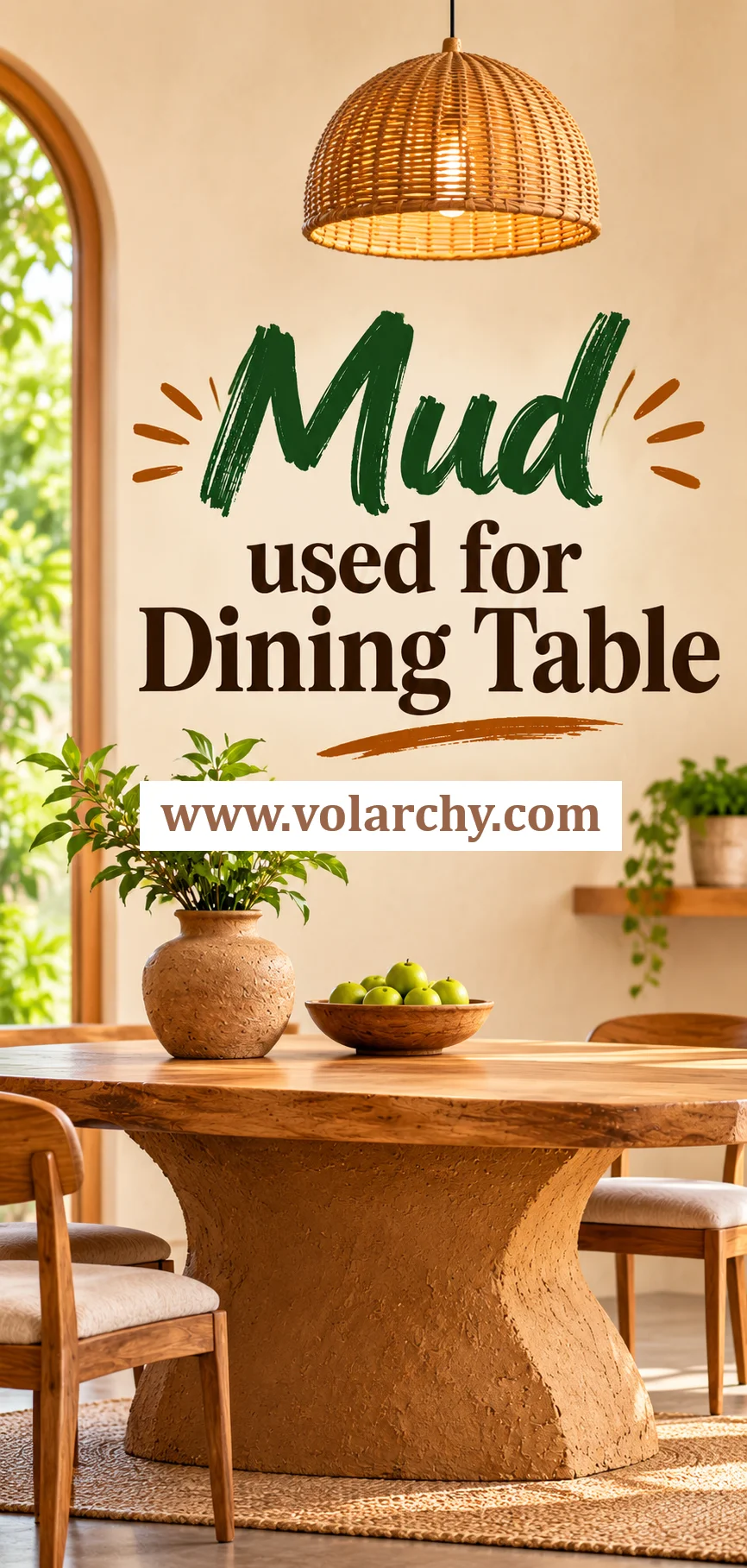

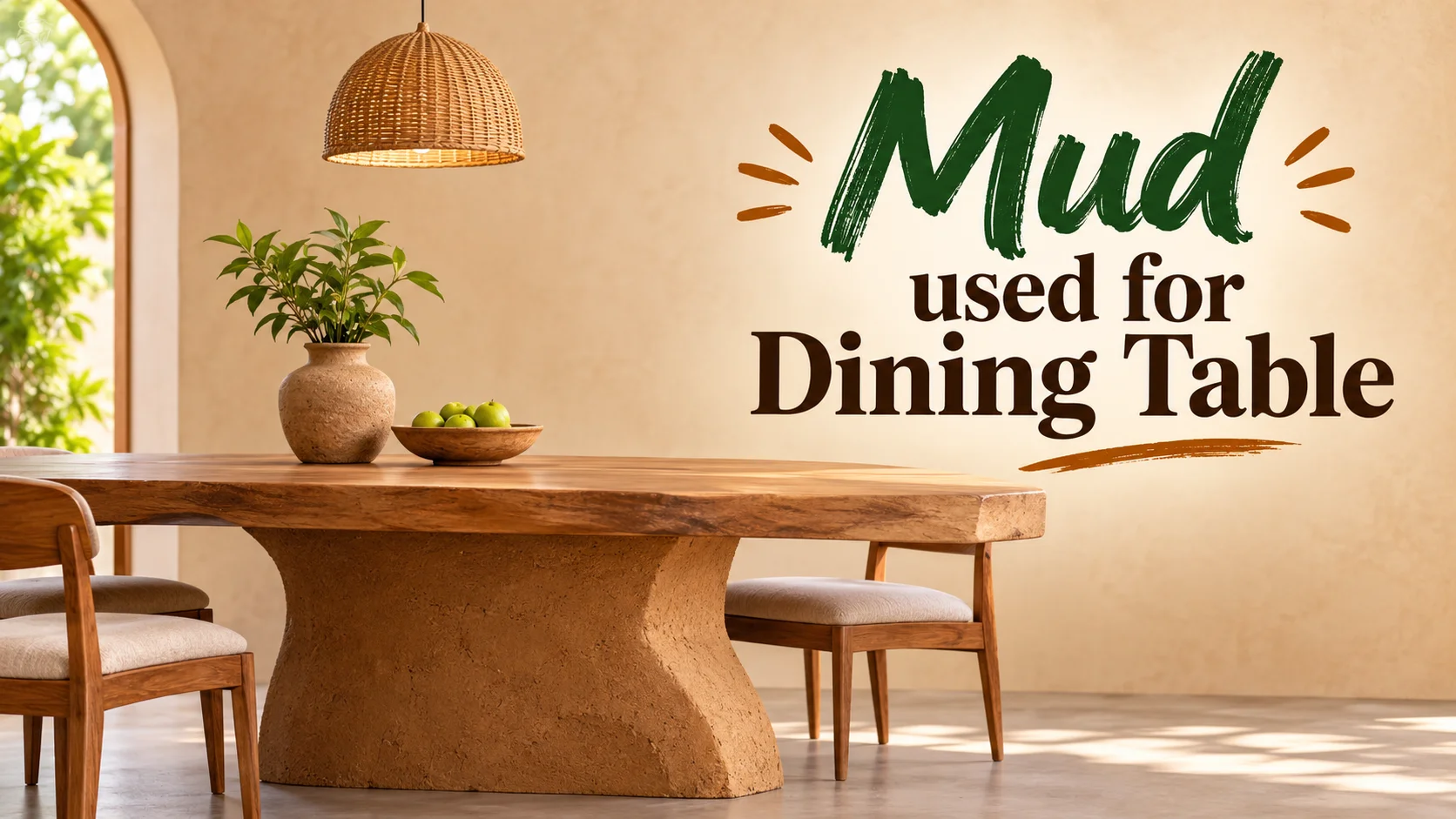
Mud used for Dining Table.
Imagine telling someone: “This dining table is made from mud.” They’ll probably look at you twice. After all, when we think of dining tables, we usually picture wooden, glass, marble or metal furniture. But what if you could introduce earth into the design of your dining table and still end up with something beautiful, functional and quite different from what we’re used to seeing?
Again, we’re not talking about piling wet soil together and placing a plank on top. We’re talking about using earthen materials as a designed and properly finished component of the furniture. Just like we’ve seen with the bed platform, mud can be used to create furniture that becomes part of the architecture rather than something you simply purchase and bring into the house.
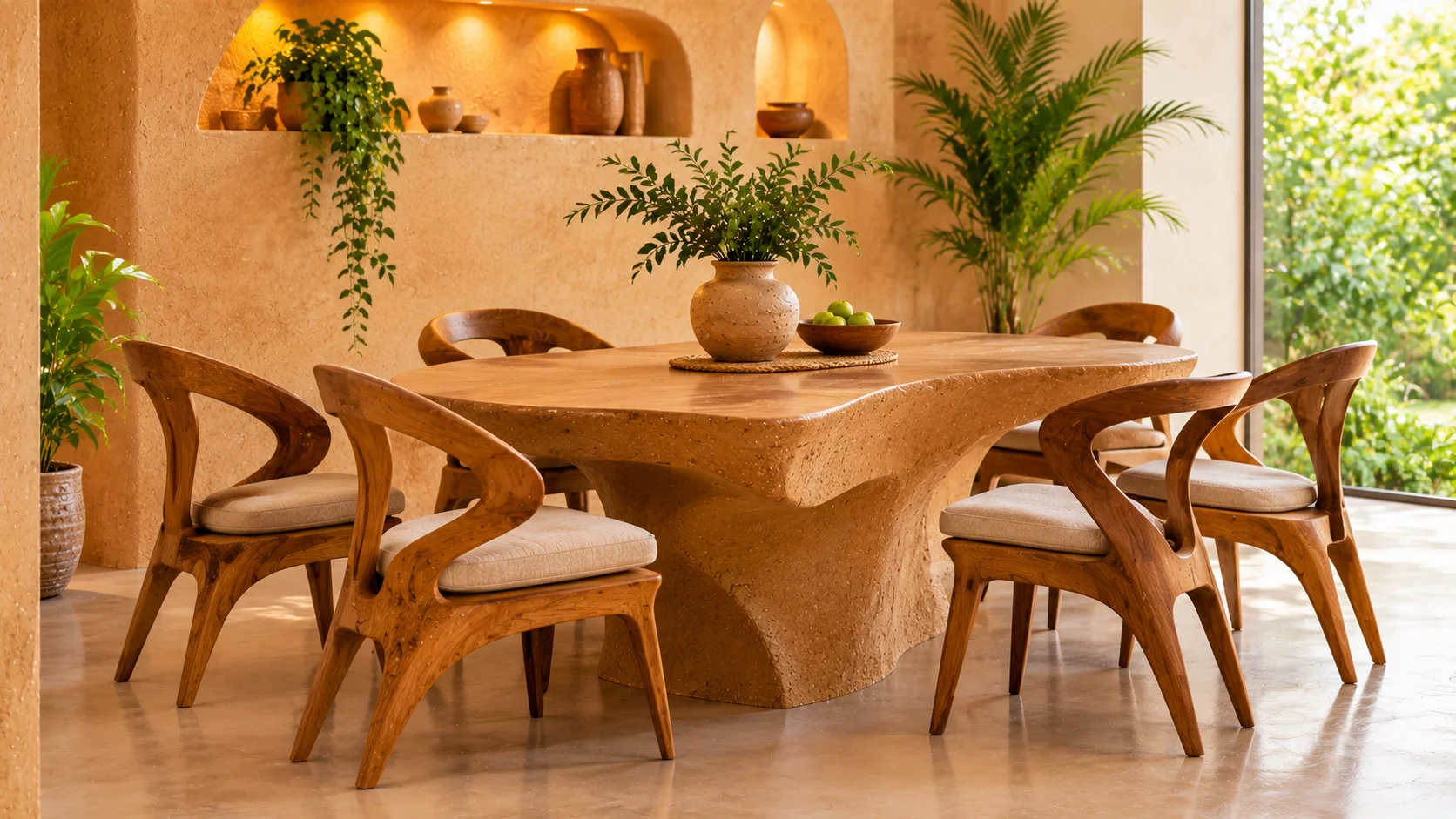
For instance, you could create a dining table with a solid earthen base and a timber, stone or concrete tabletop. The base could be designed in different shapes and forms, depending on the overall look you’re trying to achieve. Instead of the conventional four legs, you could have a thick central base, two solid supports or even a sculptural form that makes the table a statement piece in the dining area.
Read Also: Building Maintenance Manual.
Another possibility is to build the entire dining table around a suitable earthen construction technique. The structure would need to be properly designed, compacted and finished to withstand the loads and everyday use associated with a dining table. The tabletop, in particular, would need to be smooth, stable and easy to clean. You don’t want to spend your time picking food crumbs out of an uneven surface after every meal.
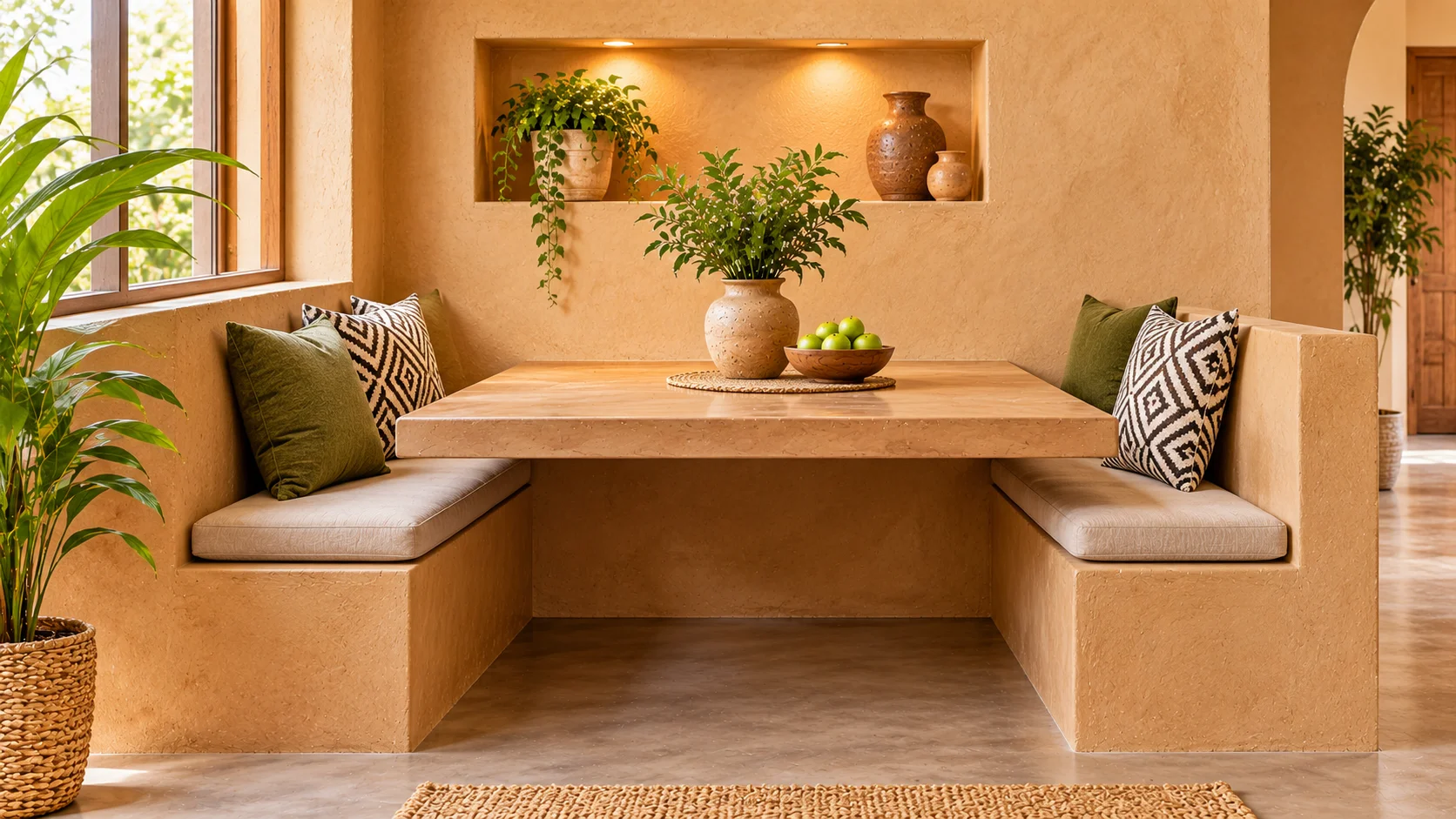
You could also create a built-in dining table that grows directly from an earthen wall or platform. A dining area where the table extends from the wall, with built-in seating on either side, creating a dining arrangement that feels like one continuous design. It could be particularly interesting in smaller homes where you want to reduce the number of separate furniture pieces taking up space.
This is where working with VolArchy comes in. You don’t necessarily need to copy something that has already been done. You can start thinking about the material differently and ask yourself what else it could become. What shape can it take? How can it be combined with other materials? How can it serve a practical purpose while contributing to the overall appearance of the space?
Once you start thinking about the house as one complete system, rather than a collection of walls, floors and furniture pieces, you begin to see possibilities you might never have considered.
In the next post, we’ll look at another way you can introduce mud into your home.
***
Don’t want to do this by yourself? Send us a message on WhatsApp, and let’s explore how to make it work for your space.
Pin 📌 Post for later!