
Mud as a Plaster Material.
You have built your entire walls with sandcrete blocks, the electrical and plumbing conduit pipes are all laid out and it’s time for plastering.
Since we are test-driving building with mud, let’s limit this to the interiors, to avoid dealing with rain. So, instead of the regular mortar mix of cement and plaster sand, you plaster all your interior walls using a suitable mud mixture.
At this point, you might be wondering what the difference would be. After all, plastering na plastering, right? Well, the material you use can influence the final appearance and feel of your walls. It also reduces the transmission of heat absorbed by the exterior part of your wall, improving your indoor air quality and making you feel cooler.
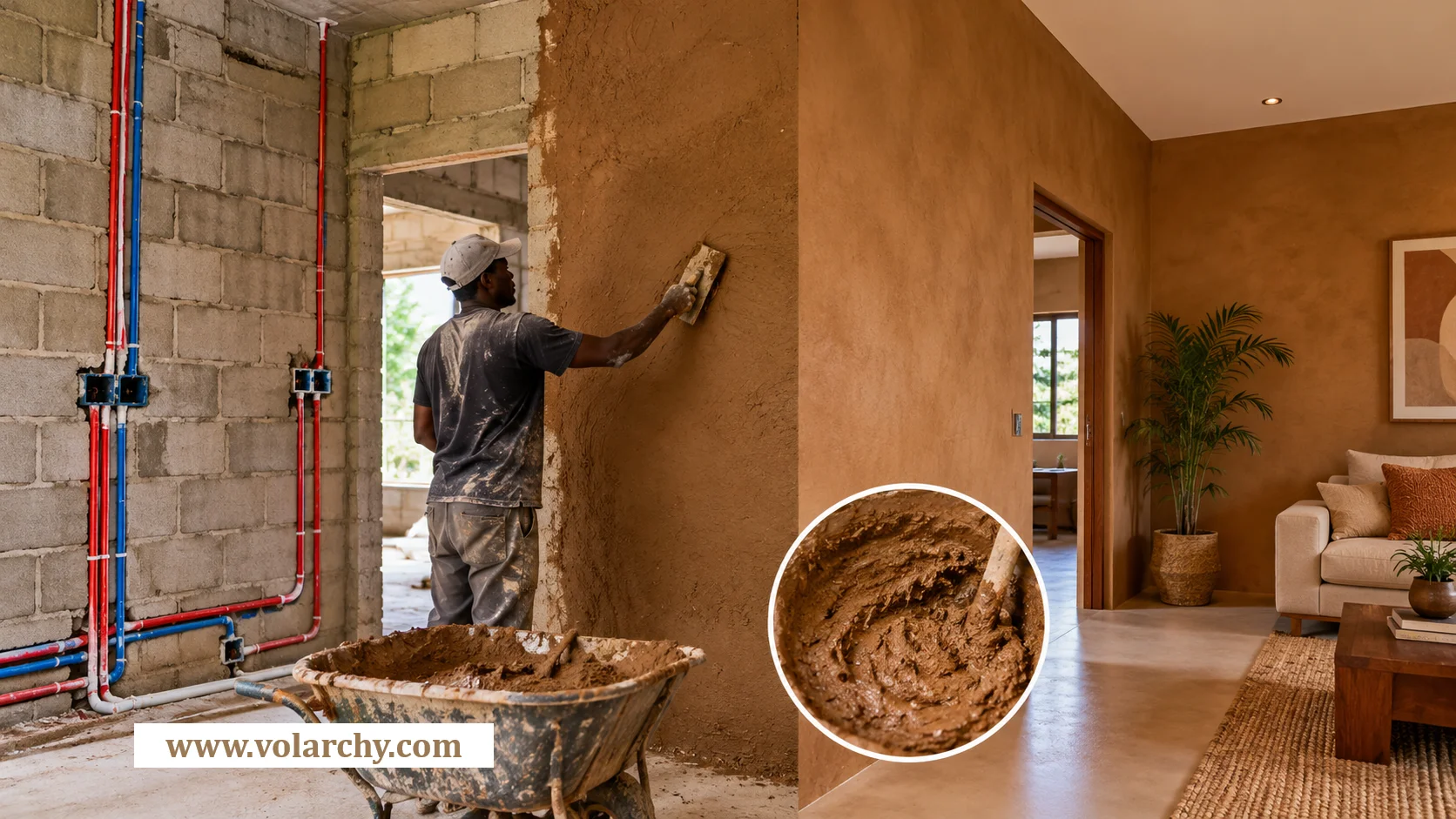
Depending on the soil mixture and how it is applied, you can achieve different shades, textures and finishes. You could keep things simple with a smooth, understated finish or allow a little more texture to show, the entire wall in your interior feels like an ever-flowing canvas, displaying a rhythm and art that suits you. And because you are only using mud on the interior walls, you still have the freedom to use your regular exterior wall finishes and other conventional building materials where necessary.
One thing to understand, however, is that you cannot just dig up any soil, mix it with water and start plastering your walls. The soil needs to be suitable for the purpose, and the mixture must be properly prepared. Too much clay can cause excessive shrinkage and cracking, while a mixture with too little clay may not bind properly. Depending on the soil, you may need to adjust the mixture with sand or other suitable materials.
You also need to pay attention to the condition of the walls before application, how well the plaster bonds to the surface, and how it will be protected from moisture. Areas that are persistently damp or exposed to frequent splashing may not be suitable without addressing the underlying moisture problem first.
Read Also: How to Effectively Read a Floor Plan like a Pro.
The interesting thing about this approach is that you don’t have to change your entire building method to experiment with earth. You can build with sandcrete blocks, use conventional materials for your structural and service requirements, and still introduce mud as an alternative interior wall decor.
Think of it as another way to bring natural materials into your home without committing to a full mud house. You get to explore the appearance and feel of an earthen finish while keeping the rest of your construction approach familiar.
In the next post, we’ll look at another way you can introduce mud into your home.
***
Don’t want to do this by yourself? Send us a message on WhatsApp, and let’s explore how to make it work for your space.
Pin Post! 📌